
Guardians of the giants: The mission to protect the whales of Los Cabos
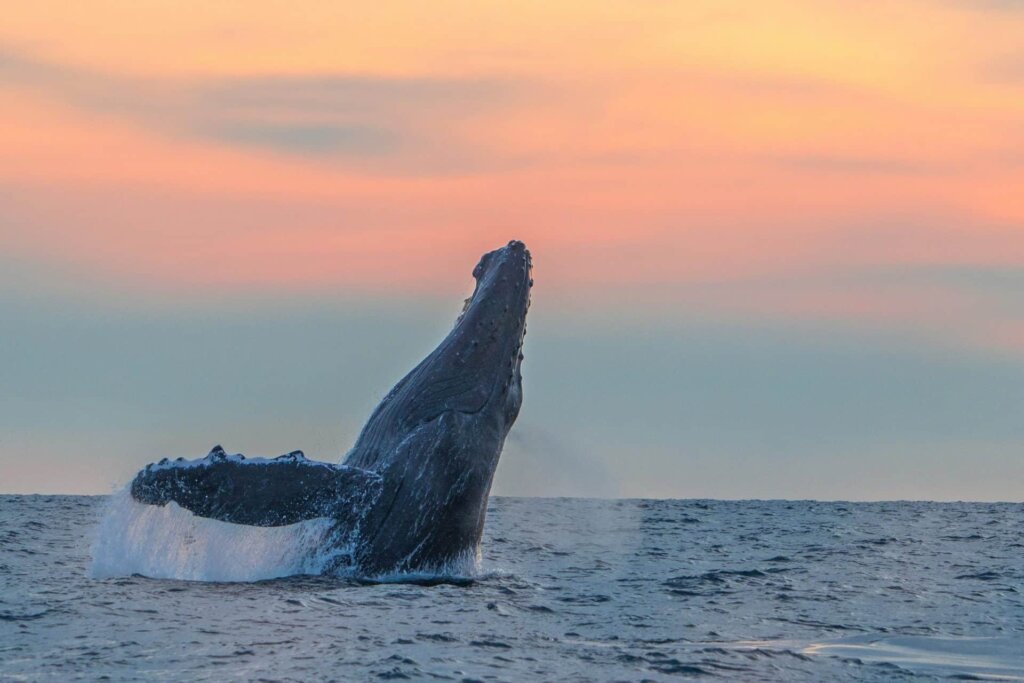
Each year, the waters of Baja California Sur become the stage for one of nature’s most moving spectacles. The arrival of the whales is more than a seasonal event; it is a profound reminder of the fragility of our oceans and the immense responsibility shared by those who live in and visit this paradise.
Why they choose Los Cabos
From December to April, after traveling more than 6,000 miles from the frigid waters of Alaska and Canada, Humpback and Gray whales arrive in the Sea of Cortez and the Mexican Pacific. This epic journey serves a vital purpose: survival. The region’s lagoons and bays offer the ideal temperature and tranquility required for courtship, mating, and, most importantly, the birth of calves, which lack the protective blubber needed to survive the extreme northern cold.
A united front: Organizations leading conservation
To ensure this life cycle continues, a sophisticated network of experts, authorities, and civil society works tirelessly under the premise of respect and science.
- RABEN (Red de Asistencia a Ballenas Enmalladas or Large Whale Disentanglement Network): This inter-institutional group acts as an elite emergency unit. Their work is critical, freeing whales trapped in fishing gear. These highly trained experts risk their own safety to restore freedom to these giants using international rescue protocols.
- Cabo Expeditions and Environmental Collectives: Beyond offering tours, these organizations lead the training of the local tourism sector. Their goal is for every captain and guide to act as a “sentinel of the sea,” ensuring that sightings occur at safe distances that do not disturb the cetaceans’ natural behavior.
- Proyecto Cetáceo and UABCS: Academia plays a fundamental role. Researchers at the Autonomous University of Baja California Sur (UABCS) conduct censuses and genetic studies to understand population health and inform long-term protection policies.
- Federal Authorities (PROFEPA and CONANP): The Federal Attorney for Environmental Protection and the National Commission of Protected Natural Areas are responsible for monitoring and enforcing the Official Mexican Standard (NOM-131). Their presence ensures the marine sanctuary is respected by all vessels.
How to help when visiting Los Cabos
The conscious traveler is the most powerful tool for conservation. If you wish for your whale-watching experience to have a positive impact, consider the following guidelines:
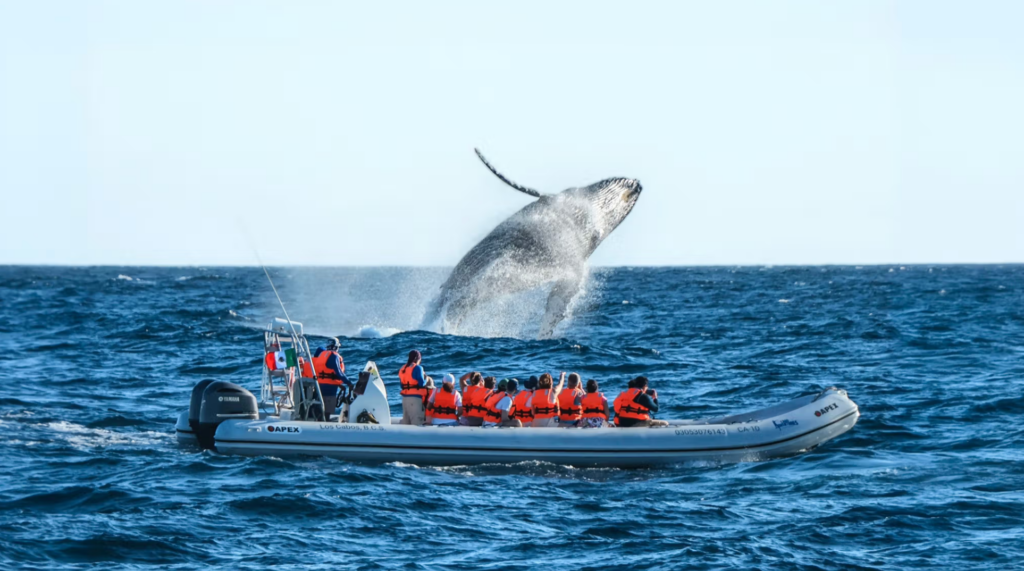
- Choose certified operators: Ensure your vessel displays the official flag—a colored distinctive indicating they have received specialized training and hold a federal permit.
- Silence as a luxury: During an encounter, respect is the gold standard. Expect the boat to maintain a minimum distance and for engines to remain in neutral if a whale approaches out of curiosity.
- Support citizen science: Many organizations invite tourists to share photos of whale flukes (tails), which serve as unique identifiers, to contribute to global identification databases.
- Donations and awareness: Institutions like RABEN often operate with limited resources. A donation, or simply sharing the importance of their work, helps keep these rescue brigades active.
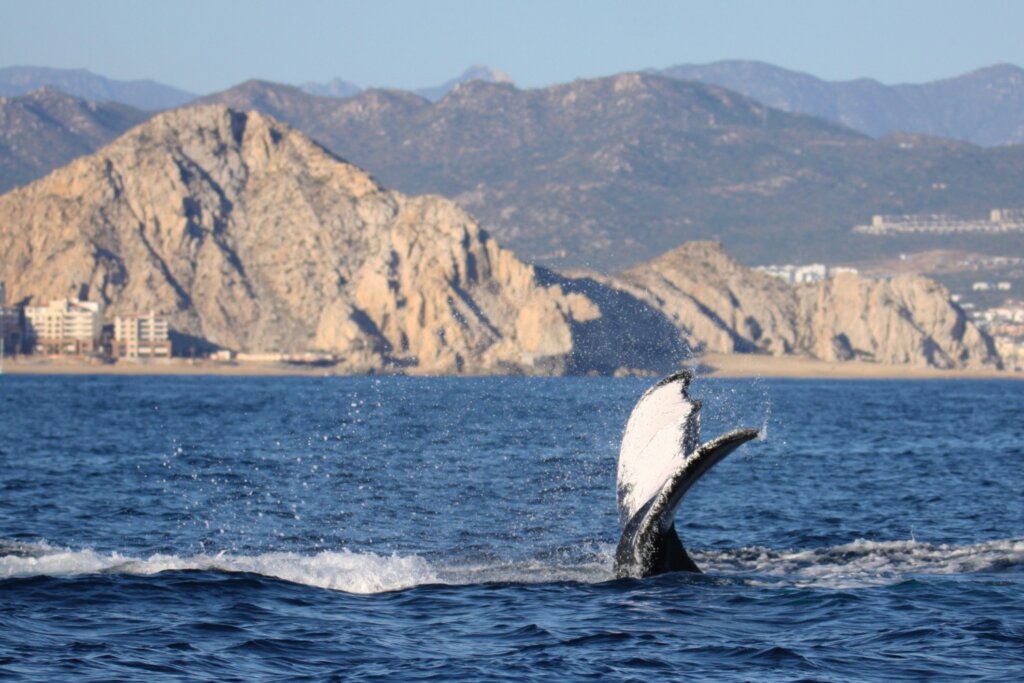
Witnessing a Humpback whale breach is a life-changing experience. However, the true privilege lies in knowing that your visit supports a protective ecosystem, ensuring these “nations of the sea” return year after year. In Los Cabos, conservation is not an option; it is the beating heart of our maritime identity.
-
Hopping into luxury: A fresh take on Easter at Mexico’s iconic beaches
Springtime in Mexico carries a unique light—one that invites us to pause, reconnect, and celebrate new beginnings. This 2026, Velas Resorts is elevating the Easter season, transforming…
Read moreMarch 11, 2026 -
-
Plan the chicest bachelorette trip with this experience in Mar del Cabo!
Planning a bachelorette trip can be quite the challenge: coordinating schedules, finding activities everyone enjoys, and scouting the perfect location. But what if we told…
Read moreDecember 8, 2025 -
-
35 facts about Velas Resorts to celebrate its anniversary
The celebration has begun! On November 20th, Velas Resorts celebrates an extraordinary milestone: 35 years of transforming the hospitality industry in Mexico. For this anniversary,…
Read moreNovember 20, 2025 -


